




Realizing Value from Everyday Organic Waste
Case Study Summary – Realizing Value from Everyday Organic Waste
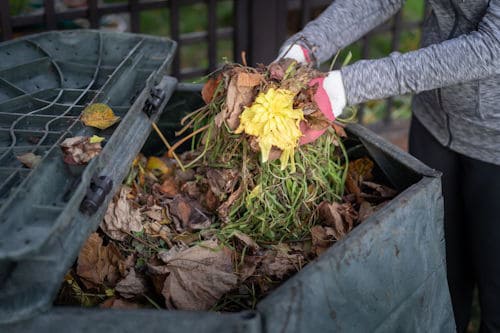
In 2021, Birla Carbon announced its aspiration to achieve net-zero carbon emissions by 2050, centering its efforts on four key strategies: research, reduce, replace, and repurpose. Building on this vision, Birla Carbon Thailand set out to rethink how everyday yard waste, like grass and leaves, could be turned into something valuable. Noticing the costs and environmental burden of hauling away this waste, the team saw an opportunity to do better for both the business and the local community.
Instead of paying for removal, they created a simple system to collect and compress the waste into cubes, which were left to break down into compost. This change meant less landfill waste, lower costs, and a useful product that could be shared with nearby farmers. As the idea originator said, “This idea grew from a simple belief: waste can become value. By turning these leaves into something useful for nearby farmers, we not only reduce our environmental footprint but also create a meaningful bridge between our plant and the community.”
The results speak for themselves: organic waste was cut by up to 70%, costs dropped, and employees became more engaged in sustainability efforts. Most importantly, this project built stronger ties with the community and showed how small, practical changes can have a real impact.
Full Case Study
The Goal
In 2021, Birla Carbon announced its aspiration to achieve net-zero carbon emissions by 2050, focusing on four core strategies: research, reduce, replace, and repurpose. To drive progress towards this vision, the company launched an ongoing sustainability channel, inviting employees to share innovative solutions to drive meaningful environmental change.
Motivated by this net-zero aspiration, our Birla Carbon Thailand (Angthong) team took steps to rethink waste as a resource, transforming materials that were considered disposable into assets that benefit both the company and surrounding communities. This innovative approach demonstrates how a unified sustainability vision can drive real change and connect our Purpose-Share the Strength-to practical solutions.
The Opportunity
Recognizing the ongoing challenge and expense of disposing grass and leaf scraps, which not only increased transportation costs but contributed to landfill waste, the Birla Carbon Thailand team saw an opportunity to repurpose organic waste. As the idea originator reflected, “Through years of working with waste management, I learned that every challenge hides an opportunity. When I saw the large amount of leaf waste in our plant and realized how much we were paying just to dispose of it, I knew we could do better. This idea grew from a simple belief: waste can become value. By turning these leaves into something useful for nearby farmers, we not only reduce our environmental footprint but also create a meaningful bridge between our plant and the community. It’s a reminder that true sustainability happens when we help each other grow.”
Instead of paying for removal, the team developed a solution to collect and compress yard waste into compact cubes that can be easily stacked and stored. Over time, these cubes decompose into nutrient-rich compost, conserving space, retaining moisture, and maintaining heat to accelerate the decomposition process. This solution not only reduces costs and landfill waste but creates valuable compost that can support internal landscaping or be shared with nearby farmers, strengthening community ties and furthering the company’s sustainability vision.
The Approach
To advance their idea, the project team presented their proposal through the company’s sustainability channel, responding to the quarterly prompt that encouraged submissions focused on incremental solutions with measurable cost benefits. The proposed solution was reviewed by the sustainability team to ensure alignment with the company’s net-zero goals. Once approved, the concept moved forward as a project with a dedicated site team established to oversee each stage of implementation.
Over a four-month period, the team evaluated multiple approaches and equipment options to determine the most effective solution. Reflecting on the project’s journey, a member of our Quality Team shared, “Every challenge we faced became an opportunity to learn and improve. Guiding the team through those moments was one of the most rewarding parts of the project.”
Their process was structured into five key phases, providing a clear roadmap from concept to operation:
- Defined in-scope and out-of-scope activities, focusing on organic waste and recyclables while excluding landfill waste
- Collected and measured data on potential solutions
- Analyzed the options to evaluate their impact and ensure alignment with the project’s goals
- Refined and improved the solution to guarantee full functionality
- Maintained and monitored the implemented activities to ensure ongoing success and effectiveness
The Results
After successful completion of the project phases, the team delivered tangible outcomes that directly advanced our company’s sustainability objectives. Finalized in February 2026, the project produced a series of proven trials, resulting in clear sustainability and financial benefits.
- Cut organic waste by 60–70%, making it easier to store and manage.
- Made decomposition 25–40% faster, ensuring less pileups of yard waste and increasing employee safety around waste storage areas.
- Reduced unplanned downtime by 20–30 hours due to improved equipment access.
- Saved 60–80% on waste costs by handling waste on-site.
- Empowered employees to take ownership of reducing organic waste, fostering teamwork and a shared commitment to sustainability in daily operations.
Reflecting on the broader impact, the site HR Manager observed, “We have seen increased employee participation in waste sorting and improved awareness of responsible waste disposal. This has contributed to better housekeeping standards and strengthened the site’s overall sustainability culture.”
The Impact
By converting biodegradable scraps into structured compost units, the project not only advances eco-friendly gardening and alleviates landfill pressure but also demonstrates the measurable business value of prioritizing sustainability. The resulting compost provides tangible benefits for both private and public green spaces, turning waste into a reusable resource. This approach showcases how employee solutions can drive meaningful change by delivering environmental gains while supporting the company’s net-zero carbon emissions commitment.
As site leadership put it, “This project serves as a vital connection between Birla Carbon Thailand and the local community. By demonstrating our commitment to environmental responsibility and effective waste management, we are building a strong reputation and becoming a trusted neighbor.”